
(Step-by-Step Guide for Beginners)
Introduction: Why Mushroom Farming is a Smart Business in India
Mushroom farming in India has emerged as one of the most promising agribusiness opportunities for beginners, small farmers, unemployed youth, and even professionals looking for an alternate income source. Unlike traditional farming, mushroom cultivation does not require fertile land, large acreage, or heavy dependence on monsoons. This single factor alone makes it extremely attractive in a country like India, where landholding sizes are shrinking and climate uncertainty is increasing every year.
Over the past decade, mushrooms have slowly moved from being a “luxury vegetable” to a regular item in Indian kitchens. With rising awareness about nutrition, protein intake, and healthy lifestyles, mushrooms are now widely accepted as a superfood. Restaurants, hotels, hostels, hospitals, cloud kitchens, supermarkets, and pharmaceutical companies are continuously increasing their demand for fresh mushrooms. However, production has not kept pace with this rising demand, creating a strong opportunity for new growers.
For beginners, mushroom farming is appealing because it offers fast results. Most mushroom crops are ready for harvest within 20 to 45 days, meaning you don’t have to wait months to see returns. You can start small, learn practically, and gradually scale up into a commercial operation. This guide is designed to walk you step by step through the entire process of starting mushroom farming in India, even if you have zero prior experience.
What is Mushroom Farming? A Simple Explanation for Beginners
Mushroom farming is the scientific cultivation of edible fungi under controlled environmental conditions. Unlike green plants, mushrooms do not contain chlorophyll and therefore do not need sunlight to produce food. Instead, they grow on organic matter such as straw, compost, sawdust, or agricultural waste.
This is one of the biggest advantages of mushroom farming. You are essentially converting low-cost or waste materials into a high-value food product. Mushrooms grow indoors, in dark or semi-dark conditions, where temperature, humidity, and ventilation are managed according to the needs of the crop.
From a beginner’s point of view, mushroom farming is less physically demanding compared to traditional farming. There is no ploughing, no weeding, and no pesticide spraying in most cases. What it requires instead is cleanliness, discipline, and basic technical understanding. Once you understand the life cycle of mushrooms and their environmental needs, the process becomes quite systematic and repeatable.
Why Mushroom Farming is Growing Rapidly in India
Low Investment with High Potential Returns
One of the strongest reasons behind the popularity of mushroom farming is that it can be started with a relatively small investment. A beginner can start oyster mushroom cultivation with as little as ₹20,000–₹30,000 using a single room or shed. Compared to other agribusinesses, this is a very low entry cost.
Despite the low investment, profit margins can be quite attractive if operations are managed properly. Because mushrooms grow quickly and can be cultivated year-round, cash flow is more regular compared to seasonal crops.
Rising Demand and Changing Food Habits
Urbanization, increasing disposable income, and health awareness have significantly changed Indian food habits. Mushrooms are now seen as a healthy alternative to meat because they are rich in protein, fiber, vitamins, and minerals, while being low in fat and calories.
Vegetarians, vegans, fitness enthusiasts, and even doctors are recommending mushrooms as part of a balanced diet. This trend is expected to grow further, ensuring long-term demand for mushroom producers.
Types of Mushrooms Grown in India
Choosing the right type of mushroom is critical for beginners.
Button Mushroom
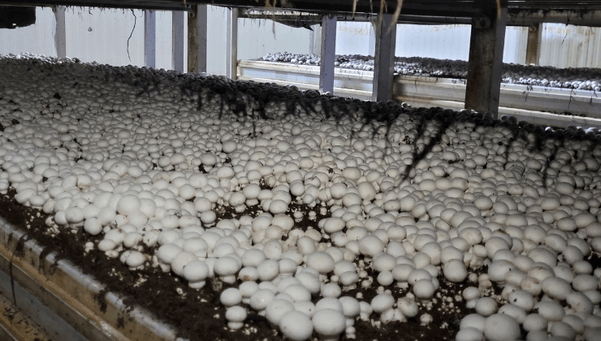
Button mushroom is the most widely consumed mushroom in India and has strong demand in urban markets. However, it requires strict temperature control (14–18°C) and compost preparation, making it more suitable for commercial growers with higher investment capacity.
Oyster Mushroom
Oyster mushroom is considered the best option for beginners. It grows well in Indian climatic conditions, requires minimal infrastructure, and has a short crop cycle. It can be grown using wheat straw or paddy straw and does not need sophisticated temperature control.
Milky Mushroom
Milky mushroom grows well in tropical and subtropical climates. It produces large, attractive fruiting bodies and has good market acceptance, especially in southern India.
Exotic Mushrooms
Varieties like shiitake and enoki fetch higher prices but require advanced knowledge and controlled environments. These are better suited for experienced growers.
Which Mushroom is Best for Beginners in India?
For someone starting mushroom farming for the first time, oyster mushroom is the safest and most practical choice. It tolerates temperature fluctuations, grows fast, and has a lower risk of crop failure. The learning curve is smooth, and beginners can understand the basics of hygiene, humidity control, and harvesting without heavy financial risk.
Once confidence and experience are gained, growers can gradually shift to button mushrooms or exotic varieties for higher returns.
Climate and Environmental Requirements for Mushroom Farming
Mushrooms are highly sensitive to their growing environment. The three most important factors are temperature, humidity, and ventilation.
- Temperature: Different mushrooms have different temperature requirements, generally ranging from 15°C to 30°C.
- Humidity: High humidity (70–90%) is essential for proper growth and fruiting.
- Ventilation: Fresh air exchange is crucial to remove carbon dioxide produced by growing mushrooms.
Beginners often underestimate the importance of ventilation. Poor airflow can result in long stems, small caps, and increased disease problems. Even a simple exhaust fan can significantly improve crop quality.
Space Requirement: How Much Area Do You Need to Start?
One of the biggest advantages of mushroom farming is that it can be done in a very small space. A single room of 10×10 feet can accommodate 50–70 mushroom bags, depending on the shelving system used.
You can use:
- A spare room in your house
- A small shed
- An unused godown
- Temporary bamboo or tin structures
The key is to ensure cleanliness, controlled humidity, and protection from direct sunlight and pests.
Raw Materials Required for Mushroom Farming
The basic materials required include:
- Mushroom spawn (seed)
- Wheat straw or paddy straw
- Plastic bags or trays
- Shelves or hanging ropes
- Clean water supply
- Disinfectants like bleaching powder or formalin
- Thermometer and hygrometer
Most of these materials are easily available locally, making mushroom farming accessible even in rural areas.
Spawn: The Backbone of Successful Mushroom Farming
Spawn is essentially the planting material for mushrooms. The quality of spawn directly affects yield, growth speed, and disease resistance. Beginners should never compromise on spawn quality to save a small amount of money.
Always buy spawn from:
- Government agricultural universities
- Certified private laboratories
- Trusted mushroom consultants
Fresh spawn should be used within the recommended time period and stored properly until use.
Step-by-Step Process to Start Mushroom Farming
Step 1: Room Preparation
Clean the room thoroughly and disinfect it to reduce contamination. Maintain proper ventilation and humidity.
Step 2: Substrate Preparation
Chop straw into small pieces, soak it in water, and then pasteurize it by boiling or steaming. Drain excess water before use.
Step 3: Spawning
Mix spawn evenly with the prepared substrate and fill it into bags or trays.
Step 4: Incubation
Keep the bags in a dark, warm environment for mycelium growth. This stage usually lasts 10–15 days.
Step 5: Fruiting and Harvesting
Once mycelium fully colonizes the substrate, maintain humidity and fresh air to trigger mushroom formation. Harvest mushrooms at the right stage for best quality.
Cost of Starting Mushroom Farming in India
| Scale | Estimated Cost |
| Small (Home Level) | ₹20,000 – ₹50,000 |
| Medium | ₹1 – ₹3 Lakhs |
| Commercial | ₹5 Lakhs and above |
Costs vary depending on infrastructure, mushroom type, and automation level
Profit Margin and Income Potential
Profit margins in mushroom farming generally range from 30% to 60%. A small unit producing 20–30 kg per day can generate a monthly income of ₹25,000–₹40,000. Commercial units can earn significantly more with proper market linkage
Common Mistakes Beginners Must Avoid
Some common beginner mistakes include:
- Using low-quality spawn
- Ignoring hygiene
- Overwatering the crop
- Poor ventilation
- Starting without market research
Avoiding these mistakes can dramatically improve success rates.
Government Subsidies and Training Programs in India
Many state governments, NABARD, and horticulture departments offer subsidies and training programs for mushroom farming. These programs provide technical knowledge, financial support, and confidence to beginners.
Marketing and Selling Mushrooms in India
Mushrooms are perishable, so quick and reliable marketing is essential. You can sell to:
- Local vegetable markets
- Hotels and restaurants
- Supermarkets
- Direct consumers
- Building local buyers first is often the smartest approach.
Scaling Up: From Small Unit to Commercial Farming
Once you gain experience, you can expand into:
- Tunnel or bunker systems
- Button mushroom compost units
- Mechanization and automation
- Value-added products like dried mushrooms
This is where mushroom farming transforms into a long-term business.
Conclusion
Mushroom farming in India offers a unique combination of low investment, fast returns, and scalability, making it ideal for beginners. With proper training, hygiene, and market planning, even a small start can grow into a profitable enterprise. The key is to start simple, learn practically, and expand gradually. For anyone looking to enter agribusiness with limited resources, mushroom farming is truly a golden opportunity.
FAQs
1. Can mushroom farming be done without land?
Yes, mushrooms can be grown indoors without agricultural land.
2. How long does it take to earn profit?
Most growers start seeing returns within 1–2 months.
3. Is mushroom farming suitable for rural areas?
Absolutely, especially due to low water and land requirements.
4. Do mushrooms need sunlight?
No, mushrooms grow best in low-light conditions.
5. Is training necessary before starting?
Training is highly recommended to reduce beginner mistakes.