
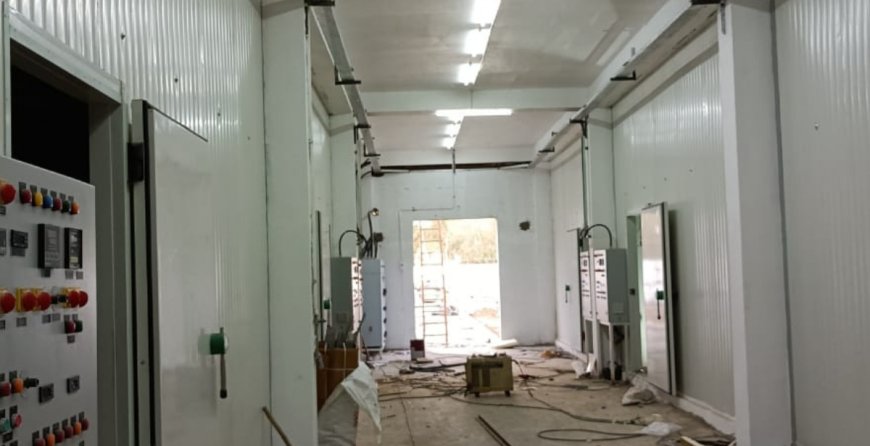
Introduction: Mushroom Farming Is Becoming an Industrial Food Production System
India is witnessing a major shift in how food is produced and supplied to growing urban populations. Among the sectors gaining attention from serious investors and agribusiness entrepreneurs is commercial mushroom farming. What was once seen as a small agricultural activity is now evolving into a technology-driven, controlled environment food production industry.
Today, industrialists, corporates, food processing companies, cold storage owners, and agribusiness investors are increasingly exploring commercial mushroom farm setup in India as a profitable and scalable opportunity. The demand for mushrooms is rising steadily due to changing food habits, growing health awareness, and increasing use of mushrooms in restaurants, hotels, processed foods, and export markets.
Unlike traditional farming, mushroom cultivation does not depend on rainfall, soil conditions, or seasonal weather. Instead, it operates inside climate-controlled mushroom growing rooms, where environmental conditions are carefully managed using modern automation systems. This makes mushroom farming more predictable, efficient, and scalable.
Because of these advantages, mushroom production is now being considered a precision food manufacturing industry, attracting interest from business houses looking for reliable agribusiness investments.
Why Corporates and Industrialists Are Investing in Mushroom Farming
Commercial mushroom farming has several advantages that make it attractive for large investors and entrepreneurs. It combines agriculture with industrial infrastructure and food processing, making it suitable for organized production systems.
Some of the major reasons behind the rising interest in industrial mushroom farming in India include:
- Year-round production independent of weather conditions
- High production per square meter compared to traditional crops
- Strong demand from hotels, restaurants, and supermarkets
- Export opportunities for fresh and processed mushrooms
- Integration with cold chain, freezing, and food processing industries
- Scalability through automation and controlled environment systems
Many cold storage owners and food processing companies are now exploring the conversion of their facilities into climate-controlled mushroom farms, because mushroom production often generates higher returns than traditional cold storage rental models.
As a result, mushroom farming is no longer limited to small growers. It is now attracting corporate investors, infrastructure developers, and food companies who see it as part of the future of modern agriculture.
Infrastructure Required for a Commercial Mushroom Farm
Setting up a successful commercial mushroom farm requires well-planned infrastructure designed for biological stability, hygiene, and operational efficiency. Unlike conventional agriculture, mushroom production takes place inside specialized facilities where environmental conditions are tightly controlled.
A typical commercial mushroom farm setup includes the following components:
- Climate-controlled mushroom growing rooms
- Insulated panel structures for temperature stability
- Air handling units and HVAC systems
- Mushroom composting bunkers or tunnels
- Environmental control and monitoring systems
- Refrigeration and cold storage infrastructure
- Post-harvest handling and packaging areas
Proper mushroom farm infrastructure setup ensures that each growing room maintains the ideal conditions for mushroom development. This allows farmers to achieve consistent yield and uniform quality across all production cycles.
Professional design and engineering are extremely important at this stage, as poorly designed infrastructure often leads to production instability and financial losses.
Importance of Automation and Climate Control Systems
Modern mushroom farms depend heavily on automation and environmental control systems. Mushrooms are highly sensitive to temperature, humidity, airflow, and carbon dioxide levels. Even small variations can affect production and crop quality.
To maintain stable conditions, industrial mushroom farms use advanced technologies such as:
- PLC-based automation systems
- Temperature and humidity sensors
- Carbon dioxide monitoring systems
- Automated ventilation systems
- Climate control software for environmental regulation
These systems work continuously to maintain ideal growing conditions inside each production room.
The advantages of automated mushroom growing systems include:
- Consistent crop production
- Reduced labor requirements
- Improved energy efficiency
- Better disease and contamination control
- Increased operational reliability
For large-scale production, automation is not optional—it is essential for maintaining productivity and profitability.
Mushroom Spawn Lab Setup: The Foundation of Production
The quality of mushroom spawn plays a critical role in determining the success of any mushroom farm. Spawn is essentially the planting material used for mushroom cultivation. Poor-quality spawn can lead to contamination, uneven growth, and reduced yields.
For this reason, many commercial farms establish their own mushroom spawn lab setup.
A standard spawn production laboratory includes:
- Sterile laboratory rooms
- Laminar airflow cabinets
- Autoclaves for sterilization
- Incubation chambers
- Grain spawn preparation equipment
- Storage facilities for finished spawn
Setting up a commercial spawn production lab offers several advantages:
- Control over spawn quality and genetics
- Independence from external spawn suppliers
- Reduced risk of contamination
- Opportunity to supply spawn to other mushroom farms
For many entrepreneurs, spawn production itself becomes a profitable business.
Composting Infrastructure: Tunnel and Bunker Systems
In button mushroom cultivation, compost preparation is one of the most critical stages of production. Compost acts as the growing medium that provides nutrients for mushroom growth.
Large mushroom farms use specialized infrastructure for compost preparation, including:
- Composting bunkers
- Composting tunnels
- Aeration systems
- Temperature and moisture control systems
These facilities allow compost to be prepared under scientifically controlled conditions.
Proper compost preparation ensures:
- Uniform substrate quality
- Healthy mushroom growth
- Higher yields
- Reduced contamination risk
Because compost quality directly influences production results, professional planning of compost infrastructure is essential.
Cold Chain and Post-Harvest Infrastructure
Mushrooms are highly perishable and must be cooled quickly after harvesting to maintain freshness and quality. This makes cold chain infrastructure an essential part of commercial mushroom production.
Post-harvest systems often include:
- Mushroom cold storage units
- Refrigeration systems
- Blast freezers
- Packaging and grading areas
Cold chain infrastructure allows producers to maintain product quality while transporting mushrooms to markets and distribution centers.
For large-scale production, integration of cold chain facilities helps reduce post-harvest losses and improves market access.
Mushroom Processing, Freezing and Value Addition
Many large mushroom farms also invest in mushroom processing and freezing units to add value to their products.
Processing infrastructure may include:
- Mushroom freezing units
- Blast freezing systems
- Individual Quick Freezing (IQF) technology
- Mushroom canning units
- Drying and dehydration facilities
- Packaging and labeling lines
Value-added products such as frozen mushrooms, canned mushrooms, and dried mushrooms have longer shelf life and can be sold in both domestic and international markets.
Processing also helps stabilize prices by reducing dependency on fresh market demand.
Reengineering and Modernization of Existing Mushroom Farms
Many mushroom farms in India were established years ago using outdated technologies. These farms often suffer from low productivity, inefficient climate control, and higher contamination risk.
Through mushroom farm modernization and reengineering, these facilities can be upgraded with modern technology.
Typical modernization activities include:
- Installation of automated climate control systems
- Upgrading HVAC and ventilation infrastructure
- Redesigning growing rooms
- Improving insulation and airflow systems
- Integrating digital monitoring and automation
Such improvements significantly increase productivity and operational efficiency.
Investment Potential in Commercial Mushroom Farming
Commercial mushroom production offers strong financial potential when designed and managed professionally.
Major revenue streams include:
- Fresh mushroom production
- Spawn production and supply
- Frozen mushroom products
- Processed mushroom products
- Export supply chains
Compared to many other agricultural ventures, mushroom farming offers:
- Faster production cycles
- High output from limited space
- Predictable production schedules
- Opportunities for value addition
These factors make mushroom farming an attractive investment opportunity for entrepreneurs and corporates.
Importance of Professional Consultancy
Setting up a mushroom farm is a complex technical process that requires expertise in biology, engineering, and automation.
A professional mushroom project consultant can help investors with:
- Site selection and feasibility analysis
- Infrastructure design and layout planning
- Equipment selection
- Automation system integration
- Installation supervision
- Operational training
Without expert guidance, mistakes in design or installation can lead to serious operational problems.
Working with experienced consultants significantly increases the chances of project success.
Growing Export Opportunities for Mushrooms
Global demand for mushrooms is increasing due to their nutritional value and versatility in cooking. Countries across Europe, Asia, and the Middle East are importing both fresh and processed mushrooms.
Export-oriented mushroom production requires:
- Strict quality control
- Proper packaging systems
- Refrigeration and cold chain logistics
- Processing and freezing facilities
Companies that integrate production with processing and cold chain infrastructure are better positioned to capture these export opportunities.
Why Turnkey Mushroom Projects Are Preferred
Many investors prefer turnkey mushroom farm setup because it ensures that all systems are designed and implemented as part of a single integrated project.
A turnkey approach typically includes:
- Project planning and design
- Infrastructure construction guidance
- Equipment selection and installation
- Automation system setup
- Spawn lab establishment
- Training and operational support
This approach reduces technical risks and ensures that the facility starts production smoothly.
The Future of Controlled Environment Agriculture
Mushroom farming is becoming an important part of the future food system. With increasing urbanization, limited agricultural land, and growing demand for nutritious food, controlled environment agriculture will play a vital role in food security.
Mushroom cultivation fits perfectly within this model because it allows high production in relatively small spaces while maintaining consistent quality.
For investors looking for a technology-driven agribusiness, commercial mushroom farming offers a promising opportunity.
Conclusion
Commercial mushroom farming has evolved into a modern agribusiness sector combining agriculture, engineering, automation, and food processing. With rising domestic demand and expanding export opportunities, the industry is attracting serious interest from industrialists, corporates, and investors.
However, successful implementation requires careful planning, proper infrastructure, and professional technical support. Facilities must be designed with integrated systems including climate-controlled growing rooms, spawn laboratories, composting infrastructure, and cold chain management.
Entrepreneurs who invest in modern technology and professional consultancy can build highly efficient mushroom production systems capable of generating stable and scalable income.
Those interested in establishing a commercial mushroom farm, spawn laboratory, cold chain facility, or mushroom processing unit should carefully evaluate project planning and infrastructure design before starting the venture.
For detailed guidance on mushroom farm consultancy, spawn lab setup, automation systems, and turnkey mushroom projects, visit www.mushroomguru.in to explore how modern mushroom technology can help transform an investment into a successful and sustainable agribusiness.